Sponsored article
How High Firing Affects the Durability and Care of a Hand-Decorated Ceramic Vase
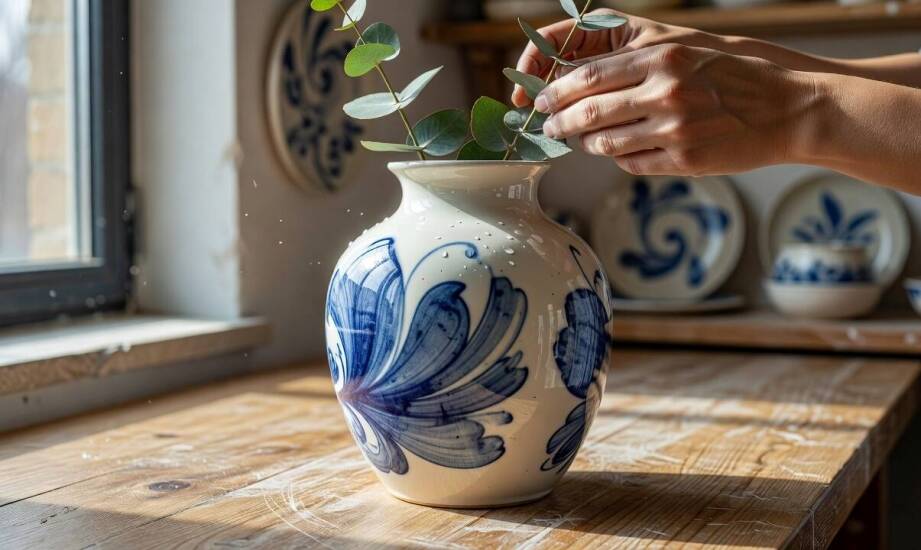
A ceramic vase does much more than simply decorate a table or shelf. It needs to support a bouquet securely, hold water for days and withstand regular cleaning without losing its functionality or decorative appeal. Its long-term performance depends on several stages of production, but one of the most important is high-temperature firing.
In traditional Bolesławiec stoneware, firing transforms shaped clay into a dense and durable ceramic material. Together with glazing, it also helps protect the hand-applied decoration and makes the finished vase suitable for everyday use.
How High Firing Affects Stoneware and Decoration
Bolesławiec pottery is made from stoneware clay and undergoes more than one firing stage. After forming and drying, a ceramic vase is first fired at around 900°C. The decoration and transparent glaze are then applied before the final firing at approximately 1250°C.
During this high-temperature stage, the stoneware body undergoes vitrification and becomes much denser and less absorbent. The result is a hard ceramic material that is well suited to holding water and to regular use in the home.
Low water absorption is particularly important for a vase, as the inside of the vessel remains in continuous contact with water whenever fresh flowers are displayed.
High Firing and Durable Underglaze Decoration
Traditional Bolesławiec patterns are applied by hand before the final glazing and firing stages. The characteristic motifs are created using stamping techniques and ceramic colourants, after which the surface is covered with a transparent glaze.
During the final firing, the decoration and protective glaze become permanently fixed to the ceramic surface. This helps protect the pattern against ordinary wear during everyday use and cleaning.
A properly fired ceramic vase can therefore combine detailed hand decoration with practical functionality. The glazed surface is easy to clean, and the vases offered by Manufaktura are suitable for washing in a dishwasher.
How Should You Care for a Glazed Ceramic Vase?
The smooth glazed surface helps prevent watermarks, flower residue and other dirt from penetrating deeply into the ceramic material. For everyday care, standard washing is usually sufficient.
Ceramic vases can be cleaned in a dishwasher, although narrow shapes may be easier to wash by hand with a bottle brush. Warm water and a mild cleaning product are generally enough to remove residue from the inside of the vessel.
High-temperature firing makes stoneware durable, but it does not make ceramics immune to every type of thermal stress. As with stoneware in general, it is sensible to avoid sudden and extreme changes in temperature that could place unnecessary stress on the material.
What Else Makes a Ceramic Vase Practical?
The durability of the material is only one aspect of a well-designed vase. Its height, the width of the base and the shape of the neck all affect how securely it stands and how flowers are displayed.
A broader base provides a larger supporting surface and can make the vessel more stable when it is filled with water or holds a heavier bouquet. A narrower neck, on the other hand, can help keep stems together while still allowing flowers to spread naturally towards the top.
The diameter of the opening is also important. It should provide enough space for the stems without allowing the arrangement to spread too widely or fall awkwardly to the sides.
As a result, the shape of the vase serves both a decorative and practical purpose.
A Vase as Part of a Coordinated Interior
A ceramic vase does not have to function as an isolated decorative object. Choosing a matching pattern can help connect it visually with other pieces used in the kitchen, dining room or living space.
Repeating similar stamped motifs across vases, plates, mugs, bowls or serving pieces creates a consistent decorative theme without requiring every object to have exactly the same shape.
This approach works particularly well with the collections produced by Manufaktura in Bolesławiec. Its ceramics are decorated by hand using traditional stamping techniques, and individual pattern codes make it possible to choose coordinating pieces from different product categories.
In this way, a vase can become part of a larger stoneware collection rather than simply a standalone accessory.
Traditional Patterns in Modern Interiors
Distinctive ornaments, repeated stamped motifs and strong colours allow a ceramic vase to become a noticeable feature of an interior. At the same time, the traditional character of Bolesławiec decoration makes it easy to coordinate the vase with other pieces of Polish stoneware.
This combination of functional form, durable stoneware and hand decoration means that ceramic vases can work equally well in traditional, rustic and contemporary interiors.
They can hold fresh flowers as part of everyday use, but they can also remain on display as decorative objects even when empty. This balance between functionality and craftsmanship is one of the qualities that continues to distinguish traditional Bolesławiec ceramics.
You might be interested

What Are the Latest Innovations in Cardboard POS Display Design?

Variety of System Entrance Mats in Floor Protection for Offices
How to Understand Cardinal Attire: Colour, Cut and Liturgical Context